
If you live with a cat, you know that shedding and excess hair on your furniture are some of the things you learn to love when you have a cat. While the shedding may not bother you, it may be a hassle when a friend or family member comes for a visit and complains that he or she is allergic to cats.
Some people with cat allergies are easygoing and go with the flow, while others aren’t afraid to express their dislike for the animal that causes sneezing, itching, coughing, and hives. As a cat owner, you may question the legitimacy of your friend’s allergy claim, but learning a few things about cat allergies may help you understand the condition a little better.
If you’re looking for additional nutritional support for your feline companion, you can also explore supplements for cats.
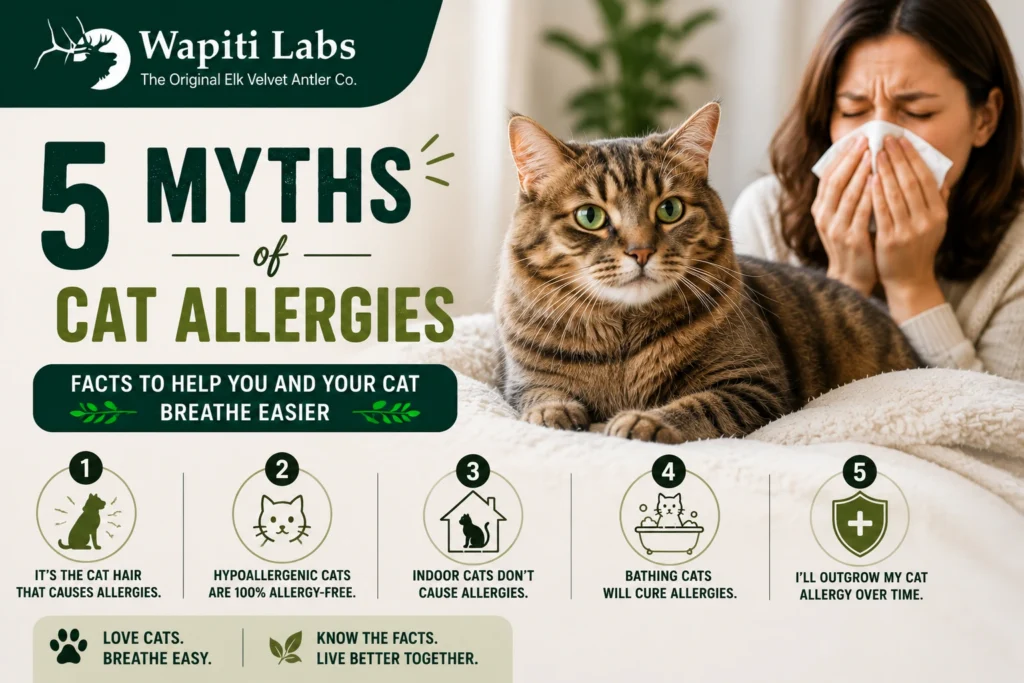
If you are allergic to cats, just the sight of a pile of cat hair might have you reaching for a handful of tissues and a bottle of eyedrops. Although a shedding cat can cause allergies to flare up, it’s not the hair itself but rather allergens, including dander and proteins, that can trigger allergic reactions.
One of the primary cat allergens is a protein called Fel d 1, which is produced primarily in a cat’s saliva and skin glands and can become distributed throughout the environment through grooming and shedding.
Cats can produce different amounts of allergens, but there is no simple rule that makes one particular coat color or sex completely allergy-free.
Contrary to the assumption that long-haired cats are necessarily more allergenic than short-haired cats, hair length alone does not determine how much allergen a cat produces.
Many cat lovers who are also allergic to cats find that this can be challenging. Some allergy sufferers become convinced that the longer they expose themselves to an allergy trigger, the less severe their symptoms will become over time.
Unfortunately, intentionally increasing exposure is not a reliable way to treat cat allergies. For some people, symptoms may remain the same, while others may experience worsening symptoms with continued exposure.
On the other hand, some people who are allergic to cats may have severe reactions to one cat while another may trigger milder symptoms. Differences in allergen exposure and individual sensitivity can contribute to these variations.
By no means should you adopt a cat as a form of “allergy treatment.” If you already have a cat and experience allergy symptoms, speak with a healthcare professional about appropriate ways to manage your allergies.
When you have a cat and are allergic, does that mean you can’t coexist? Not necessarily. For many people, it comes down to the severity of their symptoms, understanding their allergy, and taking appropriate steps to reduce allergen exposure.
If you suffer from severe or potentially life-threatening reactions when coming into contact with a cat, you should seek professional medical advice and discuss the safest options for yourself and your cat.
If you suffer from mild symptoms that are manageable, you may be able to continue living with your feline friend while taking steps to reduce allergens in your home. Talk with your doctor or allergy specialist for personalized advice.
Keeping your home free of cat allergens can be challenging, particularly when your cat spends the day happily perched on a sunny windowsill. However, regular vacuuming, wiping down surfaces, washing bedding, using appropriate air filtration, and creating a cat-free zone can help reduce allergen levels.
For additional feline wellness support, explore supplements for cats.
Technically, some cats are described as hypoallergenic, but there is no cat breed that is completely free from allergy-producing proteins.
Hypoallergenic cats may produce or distribute fewer allergens in some circumstances, but individual reactions can vary significantly. Even cats marketed as hypoallergenic can still cause symptoms such as sneezing, coughing, itching, or wheezing in sensitive individuals.
If you are considering getting a cat and have allergies, spend time around the specific animal before making a decision and discuss your situation with an allergy specialist.
Have you ever gone to a friend’s house for a party and, upon entering the front door, your eyes started watering or you began experiencing allergy symptoms? Assuming they have a cat, you might ask about it only to discover that they don’t.
Cat allergens can stick to clothing, furniture, and other surfaces. This means allergens may be carried into environments where cats are not currently present.
If you experience an allergic reaction in a cat-free environment, it is possible that you encountered allergens transported on clothing or other surfaces. Understanding the severity of your allergy and knowing how to manage symptoms can help you continue participating in social activities.
If you live with a cat, you may not suffer from a severe cat allergy, but many people experience allergies to cats and other animals. If you enjoy hosting events or having visitors from out of town, guests with cat allergies may find visiting your home challenging.
Although you may encounter people who simply won’t visit because you have a cat, try not to take it personally. Allergies can vary greatly from person to person.
If you want to make your home more inviting for friends and family members with cat allergies, consider designating a few spaces as cat-free areas and cleaning your home regularly.
You may also choose to use an air purifier, vacuum frequently, wash soft furnishings, and keep your cat away from areas where guests spend a significant amount of time.
If a guest uses over-the-counter allergy medication, they should follow the product’s instructions or speak with their healthcare professional. For severe allergies, your guests should rely on advice from their own doctor or allergy specialist.
Seasonal changes and environmental factors can affect pets differently. If your cat experiences recurring skin, respiratory, or other allergy-related symptoms, it is important to identify the underlying cause with help from your veterinarian.
For nutritional support specifically designed for feline wellness, explore supplements for cats.
Wapiti Labs provides a range of natural wellness products for pets and people. You can explore the complete Wapiti products collection to learn more.
Wapiti Labs is committed to helping pet owners support the health and wellness of their companion animals. Our product range includes nutritional supplements for cats, dogs, horses, and people.
For cat owners, start by exploring supplements for cats.
Dog owners can also supplements for dogs, while horse owners can explore supplements for horses.
For people interested in natural wellness products, visit supplements for people.
You can also browse all Wapiti Labs products or visit the Wapiti Labs homepage to learn more about the company and its product range.
Cat allergies are caused by an immune response to proteins produced by cats. These allergens can be found in saliva, dander, skin, and urine. Cat fur can carry these proteins and may also collect other allergens such as pollen and dust.
Yes. Cat dander can carry allergenic proteins and become airborne or settle on household surfaces. People who are sensitive to these allergens may develop sneezing, congestion, itchy eyes, coughing, skin reactions, or other symptoms.
No. There is no truly allergy-free cat breed. All cats produce allergens, although individual people may react differently to different cats.
Keeping cats out of bedrooms, regularly cleaning surfaces and fabrics, vacuuming, washing bedding, washing hands after handling the cat, and using an appropriate HEPA air cleaner can help reduce allergen exposure.
Some people with manageable cat allergies can live with a cat by reducing exposure and working with a healthcare professional on symptom management. However, people with severe allergies or asthma may need individualized medical advice.


Phonetic spelling: wap-i-ti
Shawnee to describe large, white, rumped deer, elk