
Dogs have a reputation for eating almost anything. From grass and discarded food to things they find around the house, many dogs seem willing to investigate anything with their mouths. That can make it easy for pet parents to assume that dogs have exceptionally strong digestive systems.
But do dogs really have iron stomachs? Not quite.
Dogs have several natural digestive defenses that allow them to process many foods effectively, but they can still experience digestive upset, food poisoning, choking, intestinal obstruction, and other serious problems after eating something inappropriate.
At Wapiti Labs, we believe informed pet care starts with understanding your dog’s natural needs. In this guide, we’ll explore how a dog’s digestive system works, what foods can create problems, whether dogs can digest bones, and what you should do if your dog eats something it shouldn’t.
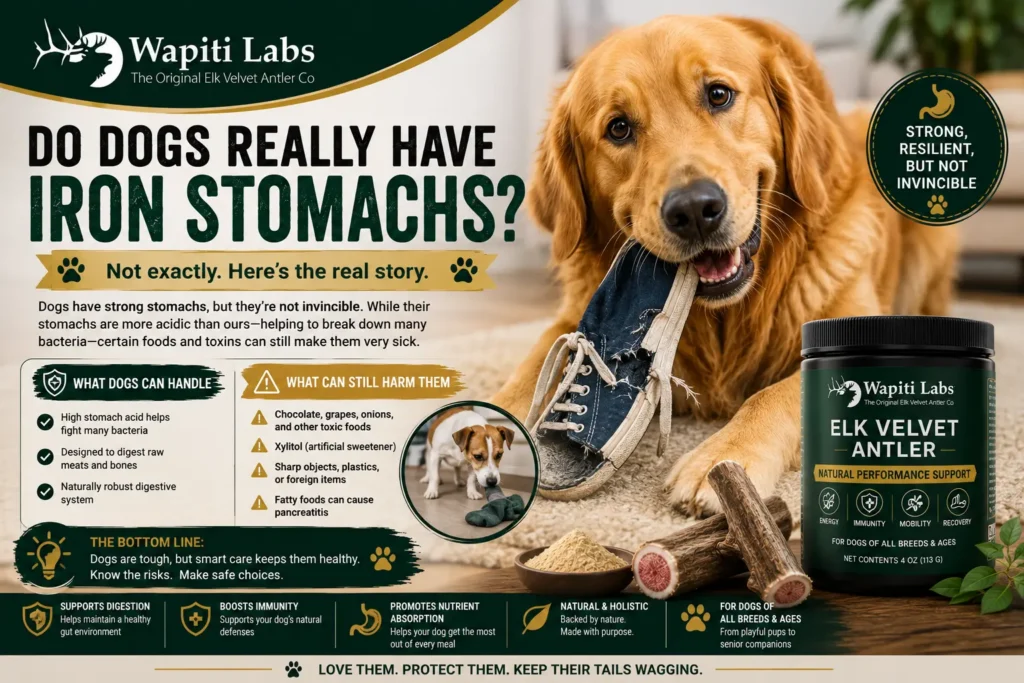
A dog’s digestive system is designed to process a combination of animal- and plant-based foods. Unlike ruminants such as cows, which have multiple stomach compartments to help break down fibrous plant material, dogs have a single-chambered stomach.
When a dog eats, food travels through the esophagus into the stomach. The stomach stores and mixes the food with digestive fluids before gradually moving it into the small intestine, where nutrients are absorbed.
Dogs also produce highly acidic stomach contents that help break down food and provide an important defense against many microorganisms.
However, a strong digestive system doesn’t mean a dog can safely eat everything.
Some foods, substances, and foreign objects can overwhelm normal digestive defenses or cause physical damage.
Dogs can tolerate some foods and bacteria that humans may find difficult to handle, but calling a dog’s stomach “indestructible” would be misleading.
A dog’s digestive system has several protective characteristics, but dogs can still develop:
Even dogs that regularly eat unusual objects without immediate consequences can eventually experience a serious problem.
That’s why it’s important not to use a dog’s previous ability to tolerate something as proof that it is safe.
Yes, dogs can get food poisoning.
Contaminated food can contain bacteria, toxins, molds, or other substances capable of making a dog sick. Spoiled food and certain raw foods can pose risks, while some human foods are directly toxic to dogs.
Potential signs of food-related illness can include:
The seriousness of these symptoms depends on what your dog consumed, how much was eaten, and your dog’s size, age, and health.
If you suspect your dog has consumed something toxic or potentially dangerous, contact your veterinarian or an appropriate emergency veterinary service rather than waiting for symptoms to become severe.
Not every food that is difficult to digest is necessarily toxic, and not every dangerous substance causes digestive symptoms immediately.
Pet parents should be particularly careful with foods and substances that can be toxic, cause choking, or create gastrointestinal obstruction.
Examples of potentially dangerous foods or substances include:
The risk can vary depending on the substance and the amount consumed.
When you’re unsure whether something your dog ate is dangerous, don’t rely on internet guesses or wait for symptoms. Contact your veterinarian for specific advice.
Dogs have evolved from ancestors that consumed prey, including bones. However, that doesn’t mean every bone is safe for a modern dog.
The type, size, hardness, and condition of a bone can all affect the potential risk.
Bones may cause problems such as:
Cooked bones can be particularly concerning because they may become brittle and break into sharp pieces.
For these reasons, many veterinarians recommend avoiding certain bones and choosing products specifically designed as dog chews instead.
If you’re looking for an appropriate chewing product for your dog, Wapiti Labs offers elk antler chews designed for canine chewing.
Elk antler chews are available in options intended for different chewing habits, including harder and softer chewers.
As with any chew, pet parents should supervise their dog and select a product appropriate for the dog’s size and chewing style. Always follow the manufacturer’s recommendations and ask your veterinarian if you’re unsure whether an antler chew is suitable for your dog.
Dogs are naturally curious, and accidental ingestion happens.
If your dog eats something inappropriate, the first step is to determine what was eaten, approximately how much was consumed, and when it happened.
If possible, keep the packaging, container, plant, food, or other material your dog consumed. This information can help your veterinarian determine the appropriate response.
Do not make your dog vomit unless a veterinarian or qualified animal poison professional specifically tells you to do so. Some substances can cause additional damage when brought back up.
Call your veterinarian as soon as possible if you believe your dog has consumed something potentially toxic, sharp, indigestible, or capable of causing an obstruction.
Watch for changes such as vomiting, diarrhea, excessive drooling, weakness, abdominal discomfort, breathing problems, unusual behavior, or loss of coordination.
If symptoms are severe or rapidly worsening, seek emergency veterinary care.
Occasional digestive upset can happen, but pet parents should pay attention to changes in normal behavior.
Common signs include:
A mild episode may resolve with appropriate veterinary guidance, but persistent or severe symptoms require professional evaluation.
You should contact your veterinarian when your dog’s digestive symptoms are persistent, severe, or unusual for your pet.
Seek prompt veterinary attention if your dog experiences:
A dog that may have swallowed a toxic substance or foreign object should be evaluated promptly, even if the dog initially appears normal.
Preventing digestive problems is generally easier than dealing with them after they occur.
Some simple habits can help support your dog’s overall gastrointestinal wellness.
Sudden dietary changes can contribute to digestive upset. When changing your dog’s food, follow your veterinarian’s recommendations and transition gradually when appropriate.
Store human foods, medications, cleaning products, and other potentially harmful substances where your dog cannot access them.
Treats should be appropriate for your dog’s size and dietary needs. Avoid giving your dog random table scraps simply because they appear harmless.
Regular, age-appropriate activity supports overall wellness and can contribute to healthy digestion.
Routine veterinary examinations can help identify health concerns before they become more serious.
Some pet parents choose nutritional supplements as part of their dog’s overall wellness routine.
Wapiti Labs offers products formulated for canine wellness, including options designed to support digestive and gastrointestinal health.
Our supplements for dogs are developed for companion animals and can be explored alongside our broader Wapiti Products collection.
A supplement should not be used to treat poisoning, an obstruction, severe vomiting, or another veterinary emergency. Always consult your veterinarian before starting your dog on a new supplement, especially if your dog has an existing medical condition or takes medication.
Wapiti Labs provides products for different types of customers and companion animals.
Explore our:
Dogs have digestive systems with several natural defenses, including highly acidic stomach contents that help break down food. However, dogs do not have “iron stomachs.” They can still experience food poisoning, digestive upset, choking, obstruction, and other problems after eating inappropriate foods or objects.
Yes. Dogs can become sick after eating contaminated, spoiled, or toxic foods. Vomiting, diarrhea, weakness, loss of appetite, and lethargy can occur. If you suspect your dog has eaten something dangerous, contact your veterinarian promptly.
Some foods can be toxic or dangerous to dogs, including chocolate, grapes and raisins, onions and garlic, xylitol-containing products, alcohol, spoiled food, certain medications, and some bones. If you’re unsure whether a food is safe, ask your veterinarian before giving it to your dog.
Identify what your dog consumed, how much was eaten, and when it happened. Keep the packaging or substance if possible and contact your veterinarian for guidance. Do not induce vomiting unless specifically instructed by a veterinary professional.
Contact your veterinarian for persistent or severe vomiting or diarrhea, blood in vomit or stool, severe abdominal pain or swelling, extreme weakness, suspected poisoning, suspected foreign-object ingestion, difficulty breathing, collapse, or other concerning symptoms.
Dogs may be adventurous eaters, but their digestive systems aren’t invincible. A strong stomach can help your dog process many foods, yet it cannot protect against every toxin, pathogen, sharp object, or foreign body.
The best approach is prevention: provide an appropriate diet, keep dangerous substances out of reach, choose suitable treats and chews, schedule routine veterinary care, and respond quickly when your dog eats something potentially dangerous.
For additional information about canine wellness and nutritional products, visit Wapiti Labs and explore our supplements for dogs and elk antler chews.


Phonetic spelling: wap-i-ti
Shawnee to describe large, white, rumped deer, elk