
Police dogs, commonly known as K-9s, are highly trained working animals that perform demanding tasks alongside their handlers. From detection and tracking to patrol and search work, these dogs need strength, endurance, focus, and reliable mobility to perform their duties safely.
Unlike companion dogs, K-9s follow a structured working routine that includes ongoing training, physical conditioning, appropriate nutrition, recovery, and veterinary care. Maintaining their overall wellness throughout their careers is essential.
At Wapiti Labs, we create natural nutritional supplements for dogs designed to support areas such as strength, mobility, joint function, and overall wellness. Explore our Supplements for Dogs to learn more about our canine-focused formulas.
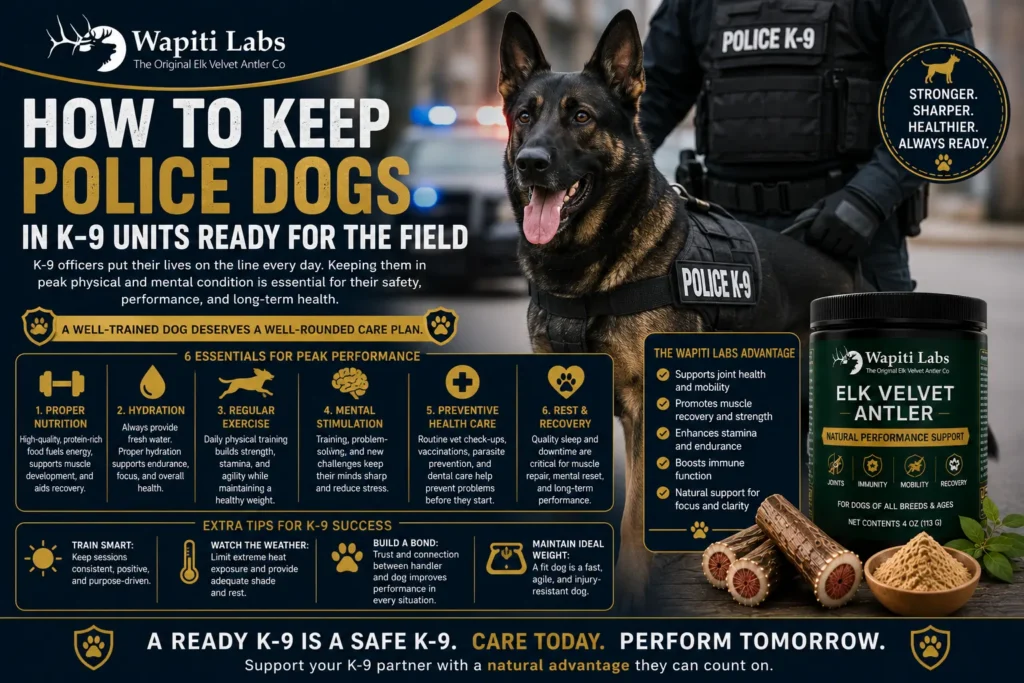
Police dogs are working animals trained to perform specific tasks in environments that can be physically and mentally demanding. Their responsibilities may include:
Because of these demands, K-9s need more than basic obedience. They require continued conditioning and practice to maintain the skills, confidence, and physical abilities needed for their roles.
A strong relationship between a K-9 and its handler is also essential. Dogs must be able to respond to commands, remain focused around distractions, and work effectively in unfamiliar or stressful environments.
Police dogs stay fit through a combination of regular training, appropriate exercise, nutrition, recovery, and veterinary care.
Their conditioning should reflect the tasks they are expected to perform. A detection dog may need excellent endurance and concentration, while a patrol dog may require strength, agility, and the ability to navigate different surfaces and obstacles.
Training should be structured around the individual dog’s age, breed, fitness level, job responsibilities, and health.
Basic obedience provides the foundation for police dog training. K-9s need to understand and reliably respond to commands from their handlers.
Training may continue throughout a dog’s working career to maintain existing skills and introduce new tasks.
Working dogs may need to climb, jump, run, change direction, and move across uneven terrain. Appropriate conditioning helps maintain physical readiness for these activities.
Exercise should always be adjusted according to the individual dog’s condition. Overtraining can contribute to fatigue or injury, so rest and recovery are just as important as physical activity.
Many K-9s specialize in scent-related work. Detection dogs are trained to recognize specific odors and communicate the discovery to their handlers.
Positive reinforcement is commonly incorporated into training to encourage the desired behavior and maintain the dog’s motivation.
Nutrition is a major part of maintaining a working dog’s health.
Police dogs generally need a complete and balanced diet appropriate for their age, size, activity level, and individual nutritional requirements. Because working dogs can expend substantial energy, their food and feeding routine may need to differ from those of less-active companion dogs.
Handlers should work with a veterinarian or qualified veterinary nutrition professional when making significant dietary changes, particularly for dogs with special health or performance needs.
Fresh water should also be readily available, particularly after exercise or training.
Treats and rewards can be useful during training, but they should be incorporated into the dog’s overall nutritional plan rather than replacing a balanced diet.
Working dogs place significant demands on their bodies. Regular veterinary examinations can help identify potential health problems before they interfere with a K-9’s ability to work.
Areas that deserve particular attention include:
Running, jumping, climbing, and navigating obstacles can place stress on a dog’s muscles and joints. Maintaining a healthy body weight, providing appropriate exercise, and allowing adequate recovery can help support normal mobility.
Strong muscles help working dogs perform physical tasks effectively. Conditioning should be gradual and appropriate for the dog’s current fitness level.
Police dogs may work on pavement, grass, gravel, dirt, and other surfaces. Handlers should regularly inspect paws for cuts, abrasions, irritation, or other problems.
Hard-working dogs need opportunities to rest and rehydrate. Recovery periods allow the body to return to normal after demanding physical activity.
Physical fitness is only one part of a working dog’s health. K-9s also need appropriate mental stimulation, positive interaction with their handlers, and adequate downtime.
Preventing injuries starts with understanding the individual dog.
Handlers can help by paying attention to changes in behavior, movement, appetite, energy, and performance. A dog that suddenly becomes reluctant to jump, climb stairs, run, or perform a familiar task may be experiencing discomfort.
Other useful practices include:
A working dog may continue trying to perform because it is trained to please its handler. That makes it especially important for handlers to recognize subtle changes rather than waiting for an obvious injury.
Veterinary care should remain an important part of every K-9’s career.
Routine examinations can help veterinarians monitor a working dog’s general health and identify concerns involving joints, muscles, weight, dental health, skin, or other systems.
If a police dog develops persistent lameness, unusual stiffness, reduced endurance, difficulty performing familiar activities, or other concerning symptoms, the handler should consult a veterinarian.
Supplements should also be discussed with a veterinarian, especially when a dog is taking medications or has an existing health condition.
A complete diet should provide the foundation for a dog’s nutritional needs. In some situations, a veterinarian may also recommend a supplement to complement the dog’s normal diet.
Wapiti Labs produces natural nutritional supplements for dogs using ingredients such as Elk Velvet Antler and traditionally used herbs.
Our Wapiti Products collection includes formulas designed to support different aspects of canine wellness.
For active and working dogs, nutritional support may be considered as part of a broader wellness routine that includes:
The goal isn’t to replace proper nutrition or veterinary treatment. Instead, supplements can be considered as one component of an overall approach to supporting a dog’s normal health and function.
Mobility is particularly important for police dogs because many of their duties involve movement.
A K-9 may need to run after completing a long period of waiting, jump over an obstacle, climb stairs, or move quickly across uneven terrain. Maintaining healthy joints and normal muscle function can help support these everyday activities.
Wapiti Labs offers canine formulas designed around different wellness goals. Visit our Supplements for Dogs page to explore the available options.
If you’re interested in Wapiti Labs products for other animals or people, you can also explore our:
A police dog’s working career eventually comes to an end. The exact retirement age can vary depending on the individual dog’s health, breed, job responsibilities, performance, and the policies of the department.
As a K-9 gets older, its exercise and training routine may need to be adjusted. Lower-impact activities, appropriate nutrition, mental stimulation, and regular veterinary examinations can help support quality of life after retirement.
Many retired police dogs continue living with their handlers or other families and transition from demanding working schedules to a more relaxed lifestyle.
Retirement doesn’t mean a K-9 stops needing care. Older dogs still benefit from regular movement, healthy weight management, mental enrichment, and attention to changing mobility needs.
Police dogs stay physically fit through regular training, conditioning, appropriate exercise, balanced nutrition, adequate rest, and routine veterinary care. Their exercise should be tailored to their specific job, age, breed, and fitness level.
K-9 police dogs generally need a complete and balanced diet appropriate for their age, size, activity level, and individual nutritional requirements. Because working dogs have demanding routines, their feeding plan should be discussed with a veterinarian or qualified veterinary nutrition professional.
Training frequency varies according to the department, dog’s role, individual needs, and type of work. K-9s typically receive ongoing training throughout their careers to maintain obedience, physical conditioning, scent skills, and job-specific abilities.
Handlers can help reduce injury risks by maintaining appropriate conditioning, avoiding sudden increases in exercise intensity, providing rest and recovery, monitoring weight, inspecting paws, and scheduling regular veterinary examinations. Changes in movement or behavior should be addressed promptly.
There is no universal retirement age for every police dog. Retirement depends on factors such as the dog’s health, physical condition, job requirements, performance, and department policies. Some K-9s may retire earlier if health or mobility concerns develop, while others can work effectively for many years.
Police dogs dedicate years to serving alongside their handlers. Supporting their physical condition requires more than training alone it involves proper nutrition, appropriate exercise, recovery, preventive veterinary care, and attention to their changing needs.
Wapiti Labs is committed to helping pet parents and working-dog handlers support canine wellness with naturally derived nutritional supplements. Explore Wapiti Labs or browse our Supplements for Dogs to learn more about our canine products.


Phonetic spelling: wap-i-ti
Shawnee to describe large, white, rumped deer, elk