
Cats are remarkably adaptable animals, and their personalities often become even more distinctive as they grow older. While senior and geriatric cats can continue to enjoy many happy, comfortable years, aging naturally brings changes that require a little extra attention from pet parents.
Older cats may become less active, sleep more, experience changes in vision or hearing, or become more hesitant when jumping and climbing. Some age-related health conditions can also develop gradually, making regular veterinary care especially important.
At Wapiti Labs, we are committed to helping pet parents understand the changing needs of their companion animals. Our natural wellness products are formulated for different life stages and individual needs.
Here are four fascinating facts about geriatric cats and practical ways to support your aging feline.
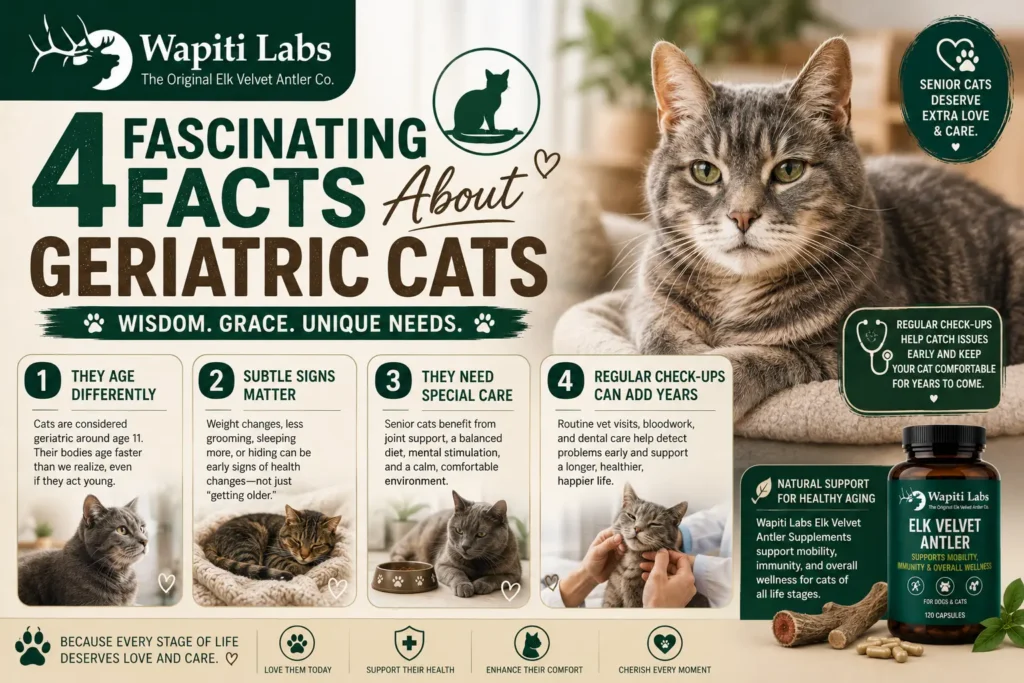
Cats can live surprisingly long lives, particularly when they receive appropriate nutrition, preventive veterinary care, a safe home environment, and regular attention to changes in their health.
There is no single age at which every cat suddenly becomes “old.” Cats age differently depending on genetics, lifestyle, nutrition, health history, and other factors.
As cats enter their senior years, routine wellness checks become increasingly valuable. Subtle changes in appetite, weight, behavior, grooming, mobility, or litter-box habits can sometimes be early indications that something needs attention.
Aging cats benefit from a consistent routine and a comfortable environment. Pet parents can support their senior cats by providing:
Wapiti Labs offers a variety of supplements for cats designed to complement feline wellness routines.
Mobility changes are common as cats age. You may notice that your older cat no longer jumps onto furniture as easily as she once did or takes more time getting up after resting.
Because cats instinctively tend to hide discomfort, mobility problems can sometimes be difficult to recognize.
Watch for changes such as:
These signs should not automatically be attributed to normal aging. Persistent changes deserve veterinary attention because mobility problems can have many potential causes.
You can make everyday activities easier for an older cat by placing important resources within easy reach.
Consider:
A comfortable environment can help an aging cat remain independent.
As cats age, their nutritional and healthcare needs may change. Older cats can be more susceptible to certain health conditions, including dental disease, kidney disease, thyroid disorders, diabetes, arthritis, and changes in vision.
This doesn’t mean every senior cat will develop these conditions. It simply means that regular monitoring becomes increasingly important as cats age.
Pet parents should pay attention to changes in:
A gradual change can be easy to overlook, especially when it develops over months. Keeping track of your cat’s normal habits makes unusual changes easier to recognize.
A senior cat’s nutritional needs can differ from those of a kitten or young adult. Your veterinarian can help determine whether your cat’s current food remains appropriate or whether adjustments are necessary.
Nutritional supplements may also be considered as part of an overall wellness plan. However, supplements should complement a balanced diet and veterinary care rather than replace them.
Changes in eyesight can occur as cats get older. Some vision problems are part of aging, while others may be associated with underlying medical conditions that require treatment.
Possible warning signs include:
If you notice sudden or significant changes in your cat’s vision, contact your veterinarian promptly.
Cats are excellent at adapting to their surroundings, but environmental changes can make life more difficult for a cat with declining vision.
Help your senior cat by:
A predictable environment can help your cat feel more confident and secure.
Senior cats don’t necessarily need dramatic lifestyle changes. Small adjustments can make a significant difference.
Older cats often spend more time sleeping. Provide warm, comfortable beds in quiet areas where your cat feels safe.
Play remains valuable for senior cats, but activities may need to be less strenuous. Short interactive play sessions can help encourage movement without unnecessarily exhausting your pet.
Both excessive weight and unexplained weight loss can be concerns in older cats. Work with your veterinarian to determine an appropriate weight and feeding plan.
Regular examinations allow veterinarians to identify changes that may not be obvious at home. Your veterinarian may recommend bloodwork, dental evaluations, blood pressure monitoring, or other assessments based on your cat’s age and health.
Some pet parents choose nutritional supplements as part of their senior cat’s wellness routine.
Wapiti Labs offers specialized cat supplements formulated for feline wellness. Discuss any supplement with your veterinarian before adding it to your cat’s daily routine, particularly if your cat takes medication or has an existing health condition.
At Wapiti Labs, we create natural wellness products for companion animals and people.
Our supplements for cats are designed specifically for feline use and can be incorporated into an overall wellness strategy based on your cat’s individual needs.
Whether you’re supporting an active adult cat or helping an older feline maintain everyday wellness, choosing a product formulated specifically for cats is important.
Wapiti Labs offers products for more than just cats. You can explore our complete range and find formulations designed for different animals and wellness needs.
Cats are generally considered senior beginning around 7 years of age, although the aging process varies between individuals. Many veterinary organizations further distinguish mature adult, senior, and geriatric life stages. Your veterinarian can help determine how your cat’s age relates to their individual health needs.
Common signs can include sleeping more, reduced activity, changes in jumping ability, decreased grooming, changes in appetite or weight, altered litter-box habits, behavioral changes, and changes in vision or hearing. New or persistent changes should be discussed with your veterinarian.
Older cats can be more susceptible to conditions such as dental disease, chronic kidney disease, hyperthyroidism, diabetes, arthritis, and certain vision problems. Regular veterinary examinations can help identify health concerns earlier.
Keep food, water, and litter boxes easily accessible; provide comfortable bedding; reduce slippery surfaces and obstacles; use ramps or steps where appropriate; maintain good lighting; and keep important household items in familiar locations.
The appropriate schedule depends on your cat’s age, health, and individual risk factors. Many veterinarians recommend at least annual examinations for senior cats and more frequent visits for geriatric cats or cats with ongoing health concerns. Your veterinarian can recommend the best schedule for your companion.
Aging is a natural part of every cat’s life, but it doesn’t mean your feline companion has to stop enjoying the things that make them happy.
With appropriate nutrition, regular veterinary care, gentle activity, a safe home environment, and attentive daily care, senior cats can continue to enjoy comfortable and rewarding lives.
If you’re exploring nutritional support for your feline companion, visit Wapiti Labs to learn more about our products and explore our dedicated supplements for cats.


Phonetic spelling: wap-i-ti
Shawnee to describe large, white, rumped deer, elk