
Mobility plays an important role in your dog’s quality of life. When a dog becomes reluctant to walk, climb stairs, jump, run, or play, it can be difficult for both the pet and the owner. Mobility changes can happen at different stages of life and may be associated with age, body weight, activity level, injury, or other underlying conditions.
The good news is that there are several ways pet parents can support healthy mobility. A combination of appropriate exercise, a balanced diet, healthy weight management, veterinary care, and carefully selected supplements may help your dog stay active and comfortable.
If your dog suddenly develops difficulty walking, severe discomfort, weakness, swelling, or another significant change in mobility, contact your veterinarian promptly rather than relying on home remedies.
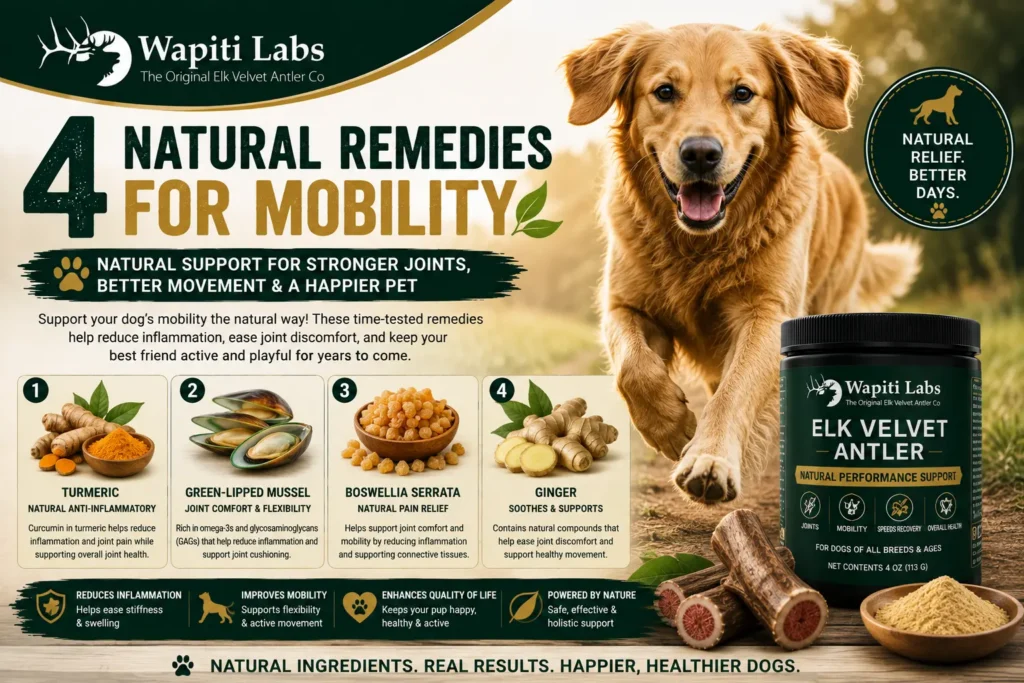
Mobility concerns can affect dogs of different ages and breeds. Some dogs may gradually become less active, while others can develop noticeable changes more suddenly.
Common signs include:
Large-breed dogs, highly active dogs, senior dogs, and dogs carrying excess weight may require particular attention to mobility and joint health.
Before starting any new treatment, supplement, exercise program, or home remedy, discuss your dog’s symptoms with a veterinarian. Mobility problems can have many different causes, and the appropriate approach depends on the individual dog.
Regular movement is one of the most important parts of maintaining your dog’s overall physical condition.
However, the right type and amount of exercise depend on your dog’s age, size, fitness level, and current mobility.
For healthy, active dogs, activities such as walking, swimming, retrieving, and other appropriate forms of play can help maintain strength and conditioning.
For older dogs or dogs already experiencing mobility difficulties, lower-impact activities may be more appropriate. Gentle walks on even surfaces can provide movement without unnecessarily increasing stress on the joints.
If your veterinarian agrees that exercise is appropriate, consider activities such as:
Avoid suddenly increasing the duration or intensity of exercise. Gradual progression is generally more appropriate than pushing a dog through discomfort.
Physical rehabilitation, hydrotherapy, massage, and other complementary approaches may also be options for some dogs. Your veterinarian can help determine whether a rehabilitation professional or another qualified provider is appropriate.
Body weight can have an important impact on mobility.
Excess weight places additional physical demands on a dog’s body and may make movement more difficult. Helping an overweight dog gradually reach an appropriate body condition can therefore be an important part of a broader mobility-support plan.
Your veterinarian can help determine your dog’s ideal body condition and recommend an appropriate feeding and exercise strategy.
Instead of making major dietary changes independently, consider working with your veterinarian to establish:
Healthy weight management isn’t a quick fix, but it can become an important long-term part of supporting your dog’s mobility.
Nutrition provides the foundation for your dog’s overall health.
Choose a complete and balanced food appropriate for your dog’s life stage and nutritional needs. If your dog has a specific health concern, your veterinarian may recommend a particular nutritional approach.
Be cautious about giving your dog human foods or homemade remedies without first understanding whether they are appropriate. Some foods that are safe for people can be harmful to dogs.
Bones also deserve particular caution. Hard bones can cause dental injuries, choking, gastrointestinal injury, or obstruction. Ask your veterinarian what types of treats or chews are appropriate for your individual dog.
For an alternative to traditional bones, you can explore Elk Antler Chews, which are available in options intended for different chewing preferences.
Some pet owners include supplements as part of a broader wellness routine for their dogs.
Ingredients commonly found in joint and mobility supplements include compounds such as glucosamine, chondroitin, omega-3 fatty acids, and other nutritional ingredients. The appropriate supplement depends on your dog’s health, diet, age, medications, and individual needs.
Elk Velvet Antler (EVA) is another ingredient used in Wapiti Labs’ natural pet supplements. Wapiti Labs offers canine formulas designed to support areas such as mobility, joint function, connective tissue, strength, and overall wellness.
You can learn more about the available Supplements for Dogs and explore the complete Wapiti Products collection.
When comparing products, consider:
A supplement should complement good nutrition, exercise, weight management, and veterinary care not replace them.
Always talk with your veterinarian before adding a new supplement to your dog’s daily routine, particularly if your dog has an existing medical condition or takes medication.
Essential oils require considerably more caution than the original version of this article suggested.
Dogs process certain substances differently from humans, and some essential oils can be toxic or irritating to pets. Applying concentrated essential oils directly to your dog’s skin or allowing your dog to ingest them can be dangerous.
For this reason, essential oils should not be considered a routine home remedy for joint or mobility problems without veterinary guidance.
If you’re interested in aromatherapy or other complementary approaches, speak with a veterinarian who is knowledgeable about veterinary integrative medicine before using an essential-oil product around your dog.
Natural mobility support doesn’t have to rely on a single remedy. A comprehensive approach can include several healthy habits.
Give your dog a comfortable place to rest. Senior dogs or dogs with mobility limitations may benefit from an easily accessible bed positioned away from stairs and other difficult-to-navigate areas.
Hard, slippery flooring can make movement more difficult for some dogs. Non-slip rugs or mats can provide additional traction in areas where your dog regularly walks.
If your dog struggles with stairs, jumping, or getting into a vehicle, consider ways to reduce unnecessary physical strain. Depending on the situation, ramps, steps, or other accessibility solutions may help.
Overgrown nails can interfere with normal footing and movement. Regular nail care can help your dog maintain better traction and comfortable movement.
Not every mobility change should be treated at home.
Contact your veterinarian if you notice a persistent or worsening change in your dog’s movement. Veterinary evaluation is particularly important when your dog:
Your veterinarian can examine your dog and determine whether additional testing, medication, rehabilitation, weight management, or another treatment is appropriate.
Maintaining mobility is an ongoing process. Regular veterinary care, appropriate exercise, healthy nutrition, weight management, and a suitable home environment can all contribute to your dog’s overall wellness.
Wapiti Labs develops natural supplements for companion animals using Elk Velvet Antler and other ingredients. If you’re looking for additional information about the company’s canine products, visit the Supplements for Dogs.
You can also explore Wapiti’s other product categories:
If your dog’s mobility has changed, start with a conversation with your veterinarian. Once underlying problems have been evaluated, you can work together on a long-term plan that supports your dog’s comfort, activity, and quality of life.
Natural approaches may include maintaining a healthy weight, providing appropriate low-impact exercise, feeding a complete and balanced diet, creating a comfortable home environment, and discussing suitable supplements with your veterinarian. The best approach depends on why your dog is experiencing mobility problems.
For many older dogs, gentle and controlled activities such as short walks may be appropriate. Swimming or veterinary-guided rehabilitation may also be options for some dogs. Exercise should be adjusted to your dog’s condition, and your veterinarian can help determine which activities are safest.
Some supplements may support joint and connective-tissue health, but results vary between dogs and products. Ingredients such as glucosamine, chondroitin, omega-3 fatty acids, and Elk Velvet Antler are found in different pet wellness formulas. Speak with your veterinarian before starting a supplement, especially if your dog takes medication.
Not all essential oils are safe for dogs, and concentrated oils can cause toxicity or irritation. Essential oils should not be applied to your dog or given orally unless specifically recommended by a veterinarian. If you’re considering aromatherapy, seek veterinary guidance first.
You should contact your veterinarian for persistent, worsening, sudden, or significant mobility changes. Immediate veterinary attention may be needed if your dog cannot walk normally, refuses to bear weight, experiences severe pain, or develops weakness, loss of coordination, or mobility problems following an injury.


Phonetic spelling: wap-i-ti
Shawnee to describe large, white, rumped deer, elk