
Your cat’s heart works continuously to circulate blood and oxygen throughout the body, making cardiovascular health an important part of overall feline wellness. While genetics can influence a cat’s risk of developing heart disease, lifestyle, nutrition, preventive veterinary care, and early recognition of changes can also play important roles.
Some heart conditions in cats can develop with few obvious symptoms in the early stages. Cats are also naturally good at hiding signs of discomfort, which means routine veterinary care is especially important.
Fortunately, there are several practical things pet parents can do to support their cat’s overall cardiovascular health.
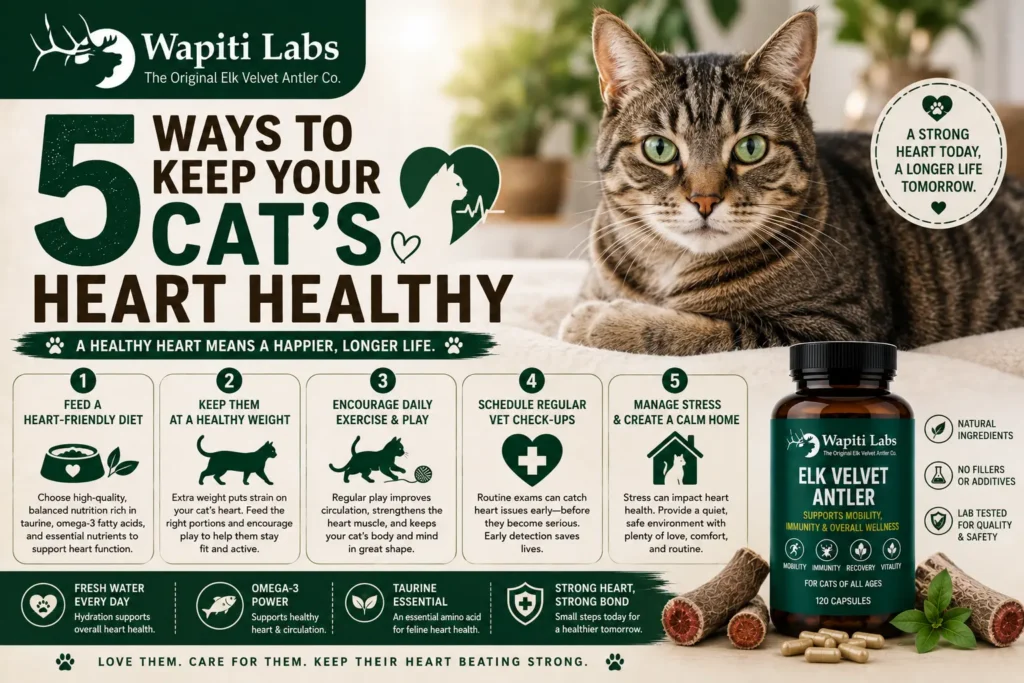
Routine veterinary examinations are one of the most important ways to monitor your cat’s heart health.
During a physical examination, your veterinarian can listen to your cat’s heart for abnormalities such as a heart murmur or irregular rhythm. They may also evaluate your cat’s breathing, pulse, weight, gums, and overall condition.
Regular examinations can be particularly important for:
Your veterinarian may recommend additional testing if they detect something unusual during an examination.
Depending on your cat’s situation, diagnostic testing may include:
Not every cat needs every test. Your veterinarian will determine which evaluations are appropriate based on your cat’s age, symptoms, breed, and health history.
Cats can be surprisingly subtle when they’re not feeling well. Learning the potential warning signs can help you recognize when veterinary attention may be necessary.
Possible signs of heart disease include:
Some of these symptoms can indicate an emergency, particularly sudden difficulty breathing, collapse, or sudden weakness/paralysis.
If your cat develops sudden breathing difficulty or another severe symptom, seek emergency veterinary care immediately.
Reduced activity can sometimes be attributed to aging, but a significant change in your cat’s normal behavior deserves attention.
If your previously active cat suddenly stops playing, hides more often, or becomes noticeably less energetic, contact your veterinarian rather than assuming the change is simply age-related.
Nutrition plays an important role in your cat’s overall health, including cardiovascular wellness.
Cats are obligate carnivores and require specific nutrients in their diet. Instead of choosing a diet based solely on whether it is marketed as “heart healthy,” work with your veterinarian to select a complete and balanced cat food appropriate for your cat’s age, health status, and lifestyle.
Maintaining an appropriate body condition is important for overall feline health.
Both obesity and unexplained weight loss can be concerning. Your veterinarian can help you determine your cat’s ideal body condition and caloric needs.
Never put an overweight cat on a restrictive diet without veterinary guidance. Rapid weight loss can be dangerous for cats.
Regular movement can help support healthy muscles, body condition, and overall wellness.
Depending on your cat’s age and physical abilities, try:
The goal isn’t to force strenuous exercise. Instead, provide opportunities for age-appropriate movement and mental stimulation.
A healthy home environment can contribute to your cat’s overall well-being.
Cats generally benefit from predictable routines, safe resting areas, and easy access to essential resources.
Make sure your cat has:
Older cats or cats with mobility limitations may benefit from having food, water, and litter boxes placed where they can reach them easily.
Cats naturally spend a significant amount of time sleeping. Don’t be alarmed simply because your cat sleeps frequently.
Instead, pay attention to changes in your cat’s normal sleeping patterns. A dramatic increase in sleeping accompanied by reduced appetite, weakness, breathing changes, or reduced interaction should be discussed with your veterinarian.
A balanced diet should be the foundation of your cat’s nutritional health. Some pet parents also choose supplements to provide additional nutritional support.
Supplements may contain ingredients such as:
Elk velvet antler is a naturally occurring ingredient containing proteins, amino acids, minerals, collagen, lipids, and other compounds associated with developing antler tissue.
At Wapiti Labs, elk velvet antler is incorporated into specialized nutritional products formulated for companion animals.
However, supplements should not be viewed as a treatment for heart disease. If your cat has been diagnosed with a cardiac condition, follow your veterinarian’s treatment plan and ask before introducing any supplement.
Wapiti Labs offers a dedicated range of supplements for cats designed specifically for feline wellness.
Our products are formulated with carefully selected ingredients and elk velvet antler to complement a healthy lifestyle.
If you’re considering a supplement for your cat, review the product information and discuss it with your veterinarian to determine whether it is appropriate for your individual pet.
Wapiti Labs provides wellness products for people and several types of companion animals.
Explore:
There is no guaranteed way to prevent every type of feline heart disease. Genetics and underlying health conditions can play a significant role.
However, you can give your cat a strong foundation by focusing on:
Routine examinations can help identify abnormalities before they become obvious at home.
Feed a complete and balanced diet appropriate for your cat’s life stage and individual health needs.
Work with your veterinarian to maintain an appropriate body weight.
Encourage regular, gentle activity through play and enrichment.
Pay attention to changes in breathing, appetite, activity, weight, behavior, and mobility.
If your cat has a diagnosed heart condition, work closely with your veterinarian and follow the recommended treatment and monitoring plan.
You can support your cat’s cardiovascular wellness by providing a complete and balanced diet, maintaining a healthy body condition, encouraging appropriate activity, reducing unnecessary stress, and scheduling regular veterinary examinations. If your cat has risk factors for heart disease, your veterinarian may recommend additional monitoring.
Possible signs include rapid or difficult breathing, unusual fatigue, reduced activity, weakness, poor appetite, weight loss, collapse, and sudden hind-leg weakness. Some cats show very few signs initially. Sudden breathing difficulty, collapse, or paralysis should be treated as an emergency.
Most cats should receive regular veterinary wellness examinations, typically at least once a year. Senior cats and cats with known health problems may need more frequent visits. Your veterinarian can recommend an appropriate schedule based on your cat’s age and individual health.
Yes. A complete and balanced diet appropriate for your cat’s age, body condition, and health status supports overall wellness. Cats with diagnosed heart disease may have specific nutritional requirements, so dietary changes should be discussed with a veterinarian.
Supplements may provide nutritional support, but they should not be considered a replacement for veterinary diagnosis or treatment of heart disease. If your cat has a heart condition or takes medication, always consult your veterinarian before introducing a new supplement because some ingredients may not be appropriate for every cat.
Your cat’s heart health is connected to many aspects of overall wellness. Regular veterinary care, appropriate nutrition, healthy body condition, safe activity, and attentive observation can all help you support your feline companion.
If you’re interested in nutritional support for your cat, explore Wapiti Labs and our specialized cat supplements. Remember that supplements are best used as part of a comprehensive wellness plan developed with your veterinarian.


Phonetic spelling: wap-i-ti
Shawnee to describe large, white, rumped deer, elk