
Keeping your dog healthy involves more than providing nutritious food and regular exercise. Pet parents also need to recognize changes in their dog’s behavior, movement, appetite, and comfort. One common health response that can affect dogs is inflammation.
Inflammation is the body’s natural response to injury, infection, irritation, or other potential threats. While inflammation can be an important part of the healing process, ongoing or excessive inflammation may signal an underlying health problem.
Understanding what causes inflammation in dogs, recognizing the warning signs, and knowing when to contact your veterinarian can help you provide better care for your canine companion.
At Wapiti Labs, we focus on natural wellness support for companion animals. Our formulas combine elk velvet antler with carefully selected natural ingredients to complement a healthy lifestyle and appropriate veterinary care.
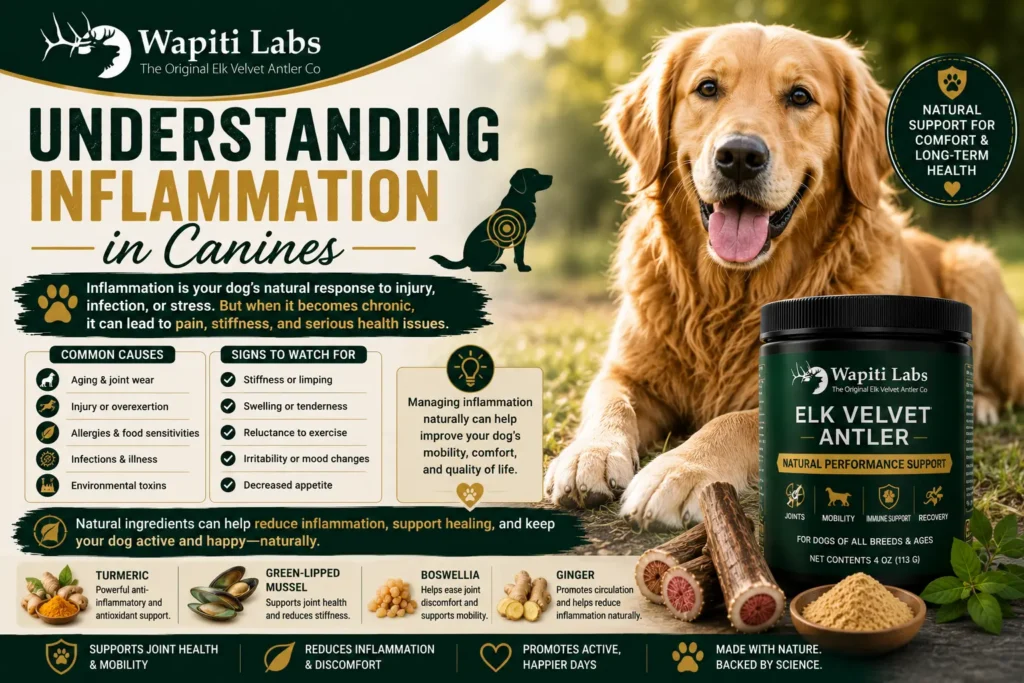
Inflammation is a normal biological response from the immune system. When your dog’s body detects an injury, infection, foreign substance, or other potential threat, immune cells and chemical signals respond to the affected area.
This response can result in symptoms such as redness, swelling, warmth, pain, or stiffness.
Inflammation can occur in many parts of a dog’s body, including the:
There are two broad patterns of inflammation: acute and chronic.
Acute inflammation develops relatively quickly and is often associated with an injury, irritation, or infection. For example, a minor injury to a paw may result in temporary swelling and tenderness.
Chronic inflammation persists or repeatedly returns over a longer period. Because persistent inflammation can be associated with a variety of underlying conditions, dogs experiencing ongoing symptoms should be evaluated by a veterinarian.
Inflammation itself is not a specific disease. It is a response that can have many different causes.
There isn’t one single cause of inflammation. A dog’s immune system can respond to many different triggers.
Active dogs can occasionally experience strains, sprains, bruises, or other injuries while running, jumping, playing, or exercising.
Swelling, tenderness, warmth, or reluctance to use an injured limb may occur. Minor injuries may improve with appropriate rest, but significant or persistent symptoms should be evaluated by a veterinarian.
Joint problems can contribute to inflammation, stiffness, discomfort, and reduced mobility.
Dogs with joint concerns may become reluctant to:
Age, genetics, previous injuries, body weight, and activity levels can all influence joint health.
Bacterial, viral, fungal, and other infections can trigger an inflammatory response.
Depending on the location and severity of the infection, a dog may also experience lethargy, appetite changes, fever, swelling, discharge, or other symptoms.
Because some infections require specific veterinary treatment, pet parents shouldn’t attempt to diagnose or treat them at home.
A tick bite can cause localized irritation and inflammation. Ticks can also transmit diseases that may cause additional symptoms.
Regularly checking your dog after outdoor activities can help you identify ticks early. Pay particular attention after walks through wooded areas, tall grass, or brush.
If you find a tick or your dog develops unusual symptoms after potential tick exposure, contact your veterinarian for advice.
Inflammation can look different depending on where it occurs. Common signs may include:
Some forms of inflammation may not be visible from the outside. For example, inflammation affecting an internal organ may produce very different symptoms.
If your dog suddenly behaves differently or seems uncomfortable, pay attention to the change and contact your veterinarian when appropriate.
No. Inflammation is not always bad.
Inflammation is part of the body’s natural immune and healing response. Short-term inflammation can occur when the body responds to an injury or infection.
The concern is generally when inflammation is severe, persistent, recurring, or associated with other concerning symptoms.
That’s why the goal shouldn’t simply be to eliminate every inflammatory response. Instead, the underlying reason for inflammation should be identified and appropriately managed.
The appropriate approach depends on the cause. There isn’t one universal home remedy for inflammation in dogs.
If inflammation is persistent, severe, or accompanied by other concerning symptoms, veterinary evaluation is important.
Your veterinarian can examine your dog and determine whether additional diagnostic testing or treatment is necessary.
Never give your dog human pain relievers or anti-inflammatory medications unless your veterinarian specifically tells you to do so. Some medications that are appropriate for people can be dangerous for dogs.
Maintaining an appropriate body weight can support your dog’s overall health and mobility.
Extra body weight can place additional stress on the joints and musculoskeletal system. If your dog needs to lose weight, work with your veterinarian to establish an appropriate nutrition and exercise plan.
Exercise helps dogs maintain muscle strength, mobility, cardiovascular fitness, and a healthy weight.
However, dogs experiencing stiffness or mobility concerns may benefit from lower-impact activities rather than intense running or jumping.
Your veterinarian can help you determine what level of exercise is appropriate for your dog.
Dogs experiencing stiffness or discomfort may have difficulty walking across slippery floors.
You can make your home easier to navigate by:
These simple changes can help your dog move around more confidently.
Nutrition is an important part of your dog’s overall wellness.
Choose a complete and balanced diet appropriate for your dog’s life stage, size, activity level, and individual needs. If your dog has a specific health condition, ask your veterinarian whether a specialized diet may be appropriate.
Some pet parents include supplements in their dog’s daily wellness routine to provide additional nutritional support.
Depending on the formula, ingredients may be selected to support areas such as:
Supplements should complement not replace appropriate veterinary care.
Before giving your dog a new supplement, consider their age, size, medical history, current diet, and medications. Your veterinarian can help determine whether supplementation is appropriate.
Wapiti Labs develops natural supplements for companion animals using elk velvet antler and other carefully selected ingredients.
If you’re interested in nutritional support for your canine companion, explore our supplements for dogs to learn more about our available formulas.
You can also browse the complete Wapiti products collection.
Wapiti Labs also provides wellness products for other members of the family. Explore our supplements for cats, supplements for horses, and supplements for people.
For dogs that enjoy chewing, you can also explore our elk antler chews.
Learn more about Wapiti Labs and our approach to natural wellness on our Website.
Contact your veterinarian if your dog develops persistent or worsening inflammation, especially if you notice:
If your dog appears seriously ill, collapses, has difficulty breathing, or experiences another emergency, seek immediate veterinary care.
Inflammation can result from injuries, infections, irritation, joint conditions, allergic reactions, immune responses, and other underlying health issues. Because there are many possible causes, persistent inflammation should be evaluated by a veterinarian.
Common signs include swelling, redness, warmth, tenderness, stiffness, limping, reduced activity, excessive licking of an area, and changes in behavior. Internal inflammation may cause less obvious symptoms.
No. Inflammation is a normal part of the body’s immune and healing response. Short-term inflammation can help the body respond to injury or infection. Persistent, severe, or recurring inflammation may indicate an underlying problem.
Treatment depends on the underlying cause. A veterinarian may recommend rest, changes to activity, medication, dietary adjustments, physical rehabilitation, or other treatments depending on the diagnosis. Pet parents should not give human medications without veterinary guidance.
Contact your veterinarian when inflammation is persistent, severe, worsening, or accompanied by pain, significant swelling, limping, lethargy, appetite changes, fever, or other concerning symptoms. Sudden severe symptoms may require emergency veterinary care.
Inflammation is a natural biological response, but persistent or severe inflammation should never be ignored. Recognizing the signs, understanding potential causes, maintaining healthy nutrition and activity, and working closely with your veterinarian can help you support your dog’s long-term health.
When nutritional supplementation is appropriate, Wapiti Labs offers natural formulas designed to complement your dog’s daily wellness routine. Explore our dog supplements and discover additional ways to support your canine companion through every stage of life.


Phonetic spelling: wap-i-ti
Shawnee to describe large, white, rumped deer, elk