
There are countless products out there made for dogs who love to chew. From rope toys to bully sticks to rawhides, the collection of available chew toys is nearly overwhelming. You may be wondering which of these chews are best suited for your pet. In our opinion, antler chews can be a natural option for dogs when selected appropriately and used with proper supervision.
If you’re looking for additional nutritional support for your dog, explore Wapiti Labs supplements for dogs for more information about products designed for canine wellness.
Chewing is actually a healthy, normal habit for your dog. It can contribute to oral health, keep them out of trouble, and provide a healthy way for them to expend energy. Chewing can also provide mental stimulation and may help reduce feelings of anxiety or frustration.
Dogs of all ages, but especially puppies, chew as a way to explore their surroundings. In puppies, chewing can also provide an outlet while they are going through the teething stage. In older dogs, appropriate chewing activities can help support oral health and keep their teeth and jaws active.
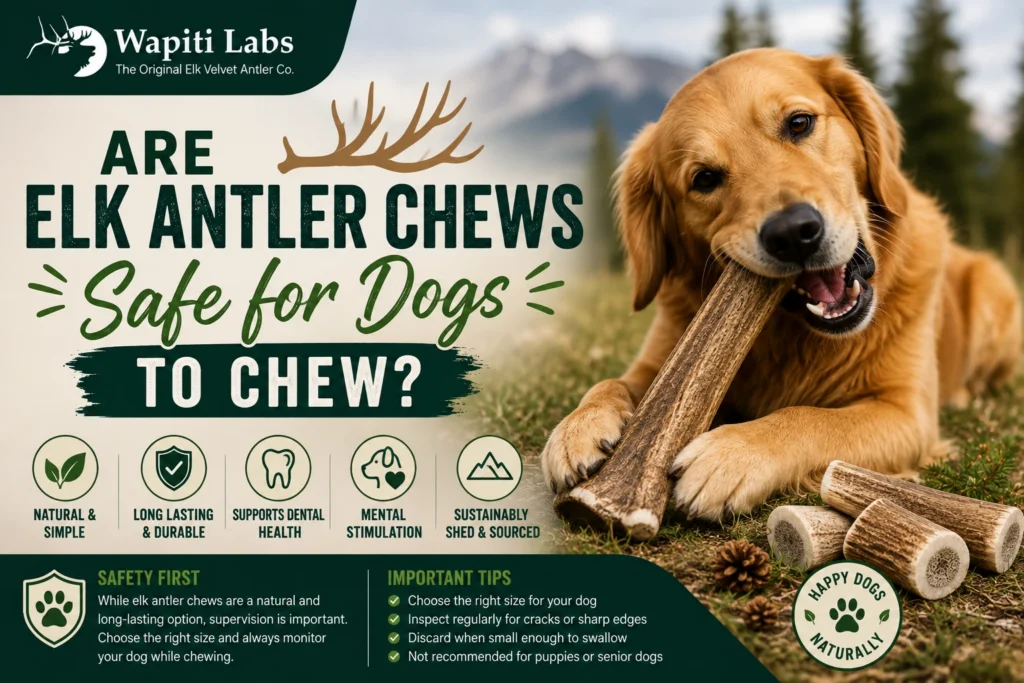
Because every dog has different chewing habits, it’s important to choose an appropriately sized chew and supervise your dog while they are using it.
The use of antlers as dog chews is not a new concept. While their popularity has grown, dogs have been chewing antlers for generations. Antlers grow primarily on male members of certain cervid species and are naturally shed after the annual growth cycle. Most commonly, dog antler chews are sourced from elk and deer populations.
For more information about Wapiti Labs its natural animal products,visit the Wapiti Labs.
The species of antler you choose is an important consideration when selecting a chew for your dog. Different antlers can vary in size, density, and texture, so dog owners should choose a chew appropriate for their dog’s size and chewing style.
According to Don from Mountain Dog Chews, “By FAR, I prefer elk antler over any other species of cervids (whitetail deer, mule deer, etc.), as the antler material offers optimal density – which makes for a chew that is durable, but also more safe.”
Elk antlers are commonly selected for their combination of durability and texture. However, no chew is completely risk-free. Dogs that are aggressive chewers or that attempt to swallow large pieces may require additional supervision and may not be good candidates for very hard chews.
There are TONS of benefits to “chewing” antlers for your pup! Okay, now that our terrible pun is out of the way, let’s discuss. Natural antler chews can provide a long-lasting chewing experience for many dogs. North American deer or elk antlers are often chosen by dog owners looking for a natural alternative to some conventional chew products.
What are some other potential benefits of choosing antler chews over other dog chew products?
You can explore Wapiti Labs collection of elk antler chews to learn more about available.
As with any chew toy, be sure to monitor your dog as they chew antlers. Choose an antler that is appropriately sized for your dog so that it does not present an obvious choking or swallowing hazard. Regularly inspect the antler chew for sharp, damaged, or excessively worn areas and replace it when necessary.
It is also important to consider your dog’s individual chewing style. Dogs that aggressively bite down on very hard objects may be at risk of dental injuries. If your dog has a history of dental problems or is an aggressive chewer, talk with your veterinarian about whether an antler chew is appropriate.
According to Dr. Mark Nunez, DVM, one important consideration when selecting a chew is whether your dog is a “gulper.” Dogs that quickly swallow large pieces require particular caution because swallowed pieces can potentially cause choking or digestive tract problems.
Here are some other tips to make sure your dog stays safe while enjoying an antler chew:
For additional canine wellness support beyond chews, you can also explore Wapiti Labs supplements for dogs.
If you’re ready to surprise your lucky pup with a natural, long-lasting chew, explore Wapiti Labs’ elk antler chews.
Wapiti Labs offers naturally sourced elk antler products designed for dogs that enjoy chewing. Choose a chew that matches your dog’s size and chewing style, and always supervise your pet during use.
To discover more products from Wapiti Labs, visit the complete Wapiti products collection or browse all Wapiti Labs products.
Wapiti Labs also provides products for other animals, including supplements for cats and supplements for horses, as well as supplements for people.
Every dog is different, so selecting the right chew is important. Consider your dog’s size, age, chewing strength, and tendency to swallow pieces before choosing an antler chew. When in doubt, ask your veterinarian for advice about whether an antler chew is suitable for your dog.
Explore the Wapiti Labs elk antler chew collection to find an option for your pup.
Elk antler chews are not completely risk-free. Their hardness can create a risk of tooth fractures, particularly for aggressive chewers. If you choose to offer an antler, supervise your dog and inspect the chew regularly. Dogs with dental problems should be evaluated by a veterinarian before receiving hard chews.
Yes. Hard objects such as antlers can fracture dogs’ teeth. The risk may be greater for dogs that aggressively bite down on hard objects. Veterinary sources specifically recommend caution with antlers and other hard chews.
Dogs with existing dental disease, fractured teeth, oral pain, recent dental procedures, or very aggressive chewing habits may not be good candidates for hard antler chews. Puppies and older dogs may also require additional caution. Ask your veterinarian for individualized advice.
There is no universal safe chewing time because dogs have different chewing styles. Supervise your dog and remove the antler if it becomes damaged, develops sharp edges, produces pieces, or becomes small enough to swallow.
Replace or remove an antler when it becomes cracked, sharp, damaged, excessively small, or begins producing pieces that your dog could swallow. You should also stop using it if your dog shows signs of oral discomfort.

Phonetic spelling: wap-i-ti
Shawnee to describe large, white, rumped deer, elk