
If your dog has suddenly lost interest in eating, seems unusually tired, or doesn’t want to go for a walk or play, it can be difficult to know what is wrong. Wouldn’t it be great if our four-legged friends could simply tell us, “My stomach hurts” or “I don’t feel well”?
Unfortunately, dogs rely on non-verbal communication, which can sometimes make health problems difficult to identify. The best way to determine what is wrong is to pay attention to changes in your dog’s behavior and speak with your veterinarian when something seems unusual.
Symptoms such as loss of appetite, decreased energy, changes in stool, vomiting, or coughing can have many causes. When these symptoms persist, they may indicate a health problem such as intestinal parasites or heartworm disease.
Understanding how intestinal worms and heartworm disease affect dogs can help you recognize potential warning signs and take preventative steps to protect your pet.
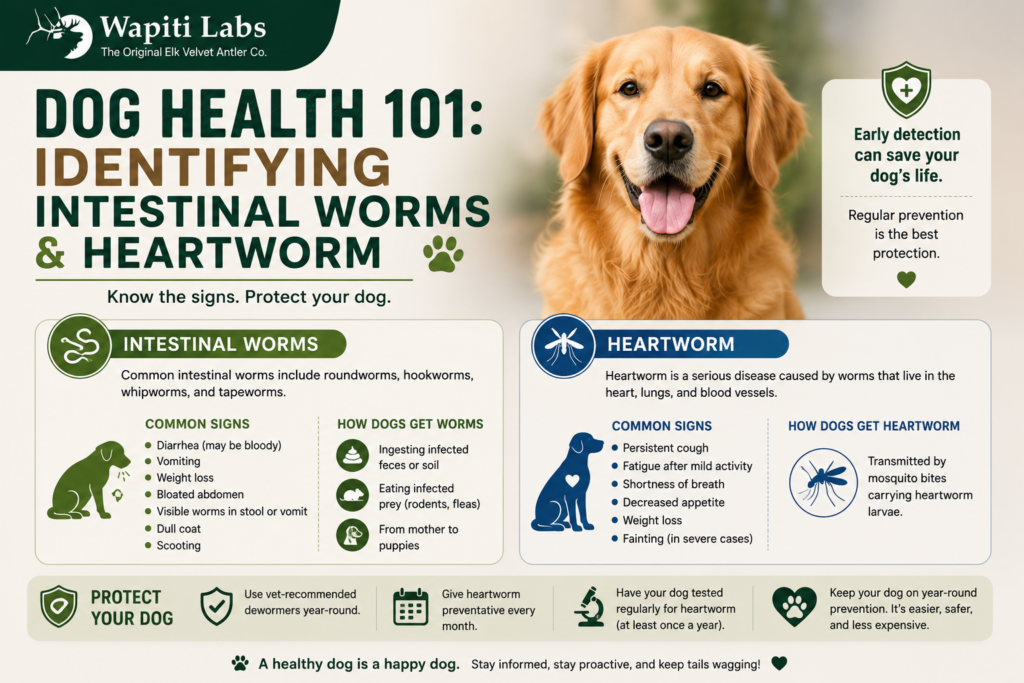
Intestinal worms, also known as intestinal parasites, are common in dogs and puppies. Unlike external parasites such as fleas and ticks, intestinal parasites live inside the dog’s gastrointestinal tract and may be difficult to detect without veterinary testing.
Some common intestinal parasites found in dogs include:
Puppies can acquire certain intestinal parasites from their mothers, including through nursing or before birth. Adult dogs can also become infected by ingesting contaminated soil, feces, infected animals, or parasite eggs and larvae.
Because some intestinal parasites can cause significant health problems, regular veterinary examinations and parasite prevention are important parts of responsible dog ownership.
Intestinal parasites are not always visible to the naked eye.
In some cases, owners may notice worms or worm segments in their dog’s stool or around the anal area. However, many intestinal parasites can only be identified through veterinary testing.
Your veterinarian may recommend a fecal examination to check your dog’s stool for parasite eggs, larvae, or other evidence of infection.
If your veterinarian asks you to bring a stool sample, follow their instructions carefully. Regular testing can be particularly important for puppies and dogs that have a higher risk of parasite exposure.
Dogs with intestinal parasites may show a wide variety of symptoms, and some dogs may have few or no obvious signs.
Potential symptoms include:
These symptoms can also be associated with many other health conditions, so they should not automatically be assumed to indicate intestinal worms.
Regular veterinary checkups, appropriate parasite prevention, and prompt attention to unusual symptoms can help protect your dog’s health.
Like intestinal worms, heartworm disease is caused by an internal parasite. However, heartworms do not primarily live in the intestinal tract.
Heartworm disease affects the heart, lungs, and associated blood vessels. If left untreated, the infection can cause serious and potentially life-threatening damage.
Heartworms are transmitted by mosquitoes. When an infected mosquito bites a dog, it can transmit immature heartworms into the dog’s bloodstream. The parasites develop and eventually migrate toward the heart and major blood vessels.
Because heartworm disease can cause serious damage before obvious symptoms appear, prevention and veterinary testing are extremely important.
Heartworm disease cannot be reliably diagnosed simply by looking at your dog.
Veterinarians typically use blood tests to screen dogs for heartworm infection. Depending on the results and your dog’s symptoms, your veterinarian may recommend additional diagnostic testing.
Heartworm disease can have few obvious signs during its early stages, which is why routine testing and veterinarian-recommended preventative care are so important.
Ask your veterinarian how frequently your dog should be tested based on your dog’s age, lifestyle, location, and risk of exposure.
As heartworm disease progresses, dogs may develop noticeable changes in their health and activity levels.
Potential signs include:
A dog that suddenly stops enjoying normal walks or becomes unusually tired should be evaluated by a veterinarian.
If your dog is experiencing difficulty breathing, collapse, severe weakness, or other serious symptoms, seek veterinary care immediately.
Parasites can be serious, but preventative care can significantly reduce your dog’s risk.
One of the most important things you can do is follow your veterinarian’s recommendations for parasite prevention. Depending on your dog’s lifestyle and risk factors, your veterinarian may recommend preventative medication for heartworm and intestinal parasites.
Regular veterinary examinations are also important. Testing can identify infections that may not yet be causing obvious symptoms.
Good nutrition supports your dog’s overall health.
Feed a complete and balanced diet appropriate for your dog’s life stage, size, and activity level. If you’re considering nutritional supplements, discuss them with your veterinarian before introducing anything new.
You can explore supplements for dogs for additional information about products designed to support canine wellness.
Regular, appropriate exercise can help dogs maintain healthy body weight, muscle tone, and overall fitness.
The amount of exercise your dog needs will depend on factors such as breed, age, size, health, and activity level.
If your dog has a medical condition or is recovering from illness, speak with your veterinarian before changing their exercise routine.
Routine veterinary care is one of the most effective ways to monitor your dog’s health.
During regular visits, your veterinarian can assess your dog’s overall condition and recommend appropriate parasite testing, preventative medications, vaccinations, and other preventative healthcare.
Don’t wait until your dog appears seriously ill before contacting your veterinarian.
Nutritional supplements should not be used as a replacement for veterinarian-recommended parasite prevention or treatment.
Heartworm prevention requires appropriate veterinary products, and intestinal parasite infections may require specific medications depending on the parasite involved.
However, nutritional supplements can be part of an overall wellness routine when recommended or approved by your veterinarian.
If you’re interested in nutritional support for your dog, explore supplements for dogs.
You can also browse the complete Wapiti Labs product to learn more about available wellness products.
At Wapiti Labs, we believe that maintaining your dog’s overall health is an important part of helping them enjoy an active and comfortable life.
Our natural wellness products are designed to complement a healthy lifestyle and can provide nutritional support for dogs.
Learn more about dog supplements and explore the broader Wapiti Labs product.
Wapiti Labs also offers products for other members of the family, including cat supplements, horse supplements, and supplements for people.
Contact your veterinarian if your dog develops persistent or unusual symptoms such as:
If your dog is having difficulty breathing, collapses, or appears severely ill, seek urgent veterinary care.
Intestinal worms and heartworm disease are common concerns for dog owners, but preventative healthcare can help reduce the risks associated with these parasites.
Regular veterinary checkups, appropriate parasite prevention, good nutrition, healthy exercise, and careful observation of your dog’s behavior can all contribute to better overall health.
If you are looking for nutritional support to complement your dog’s healthy lifestyle, visit Wapiti Labs and explore the dog supplement collection.
You can also browse Wapiti Labs products to discover the complete range of natural wellness products.
Common intestinal worms in dogs include roundworms, hookworms, whipworms, and tapeworms. Heartworms are another type of parasitic worm, but unlike intestinal worms, adult heartworms primarily live in the heart and pulmonary blood vessels.
Symptoms can include diarrhea, vomiting, weight loss, poor growth, abdominal discomfort, a pot-bellied appearance, pale gums, weakness, or visible worms or worm segments. Some dogs may have parasites without obvious symptoms, so routine veterinary testing can be important.
Dogs get heartworm through the bite of an infected mosquito. The mosquito transmits immature heartworm larvae, which develop inside the dog over time. Heartworm is therefore different from intestinal worms, which can spread through contaminated feces, soil, infected animals, or fleas depending on the parasite.
Yes. Some dogs with intestinal parasites or early heartworm infection may show few or no obvious symptoms. Regular veterinary examinations, appropriate testing, and preventive care can help detect or prevent parasite infections.
Prevention depends on the parasite. Your veterinarian may recommend appropriate intestinal parasite control, routine fecal testing, flea control, and a regular heartworm preventive. Keeping your dog’s environment clean and avoiding exposure to contaminated feces can also reduce some parasite risks.


Phonetic spelling: wap-i-ti
Shawnee to describe large, white, rumped deer, elk