
Few things are more frustrating for a dog owner than watching a beloved companion constantly scratch, lick, chew, or rub their skin. Itchy skin in dogs can interfere with sleep, playtime, exercise, and overall comfort. While occasional scratching is normal, persistent itching may indicate an underlying issue that deserves attention.
The good news is that there are several ways to support your dog’s skin and coat naturally. A balanced diet, appropriate grooming, good hydration, parasite prevention, and veterinarian-approved supplements can all play a role in maintaining healthy skin.
At Wapiti Labs, we believe supporting your dog’s overall wellness starts with thoughtful nutrition and naturally derived ingredients. Our collection of supplements for dogs is designed to support different aspects of canine health and complement a healthy lifestyle.
If your dog has persistent or severe itching, however, it is important to identify the underlying cause rather than simply treating the symptom.
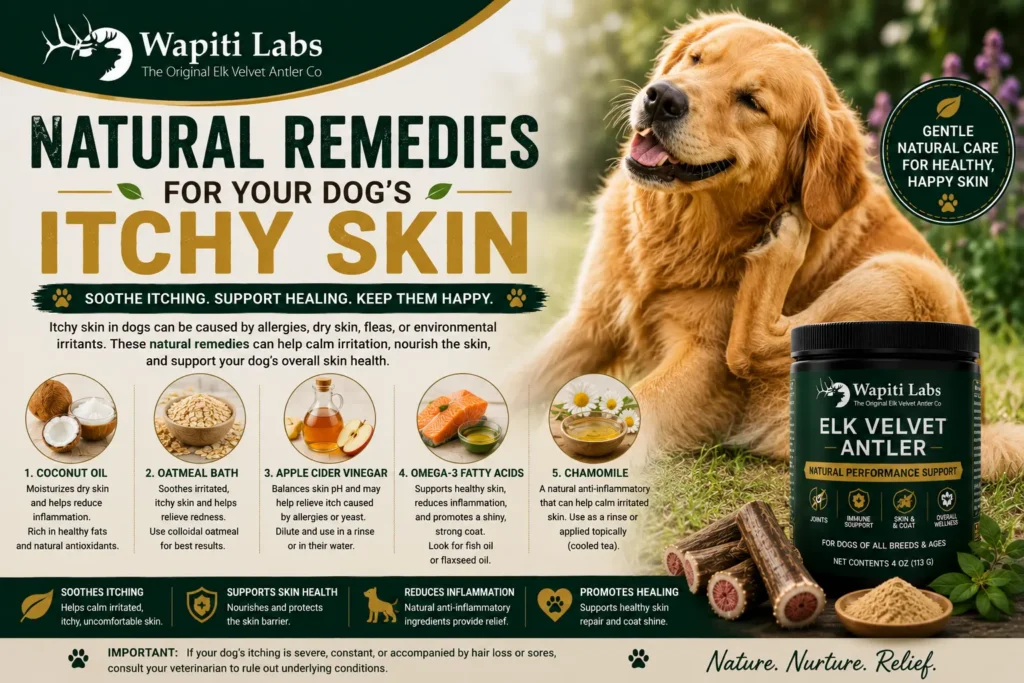
Before choosing a natural remedy, it helps to understand why your dog may be itching.
Common causes of itchy skin include:
A dog that occasionally scratches may not have a serious problem. However, frequent scratching, licking, biting, hair loss, redness, odor, scabs, or open sores should not be ignored.
If your dog’s itching is persistent or worsening, speak with your veterinarian so the underlying cause can be properly evaluated.
Nutrition plays an important role in maintaining healthy skin and a shiny coat.
Your dog needs a complete and balanced diet appropriate for their age, size, activity level, and individual nutritional needs. High-quality protein, essential fatty acids, vitamins, minerals, and adequate hydration all contribute to overall wellness.
If you suspect your dog’s food may be contributing to itching, don’t make major dietary changes without discussing them with your veterinarian. Food allergies and sensitivities can be complicated, and a veterinarian can help determine whether a dietary trial or other evaluation is appropriate.
A healthy diet may support:
For pet owners looking for additional nutritional support, explore supplements for dogs.
Adequate hydration is important for your dog’s overall health, including normal skin function.
Make sure your dog has access to fresh, clean water throughout the day. Dogs may need more water during hot weather, after exercise, or when they are recovering from illness.
Avoid giving your dog sports drinks or human electrolyte products unless your veterinarian specifically recommends them. These products may contain ingredients that aren’t appropriate for dogs.
If your dog appears dehydrated, is refusing water, is vomiting repeatedly, or seems unusually weak, contact your veterinarian promptly.
Regular grooming can help remove dirt, loose hair, allergens, and other irritants from your dog’s coat.
The right grooming routine depends on your dog’s breed, coat type, lifestyle, and skin condition. Use products specifically formulated for dogs and avoid human shampoos unless your veterinarian recommends otherwise.
Over-bathing can sometimes contribute to dry or irritated skin, so establish a bathing schedule appropriate for your dog’s individual needs.
Regular brushing can also help you notice potential problems early, including:
Early detection can make it easier to address skin problems before they become more serious.
Parasites are one of the most common reasons dogs develop itchy skin.
Flea bites can cause significant irritation, particularly in dogs that are sensitive to flea saliva. Ticks can also cause localized irritation and transmit diseases.
Check your dog regularly, particularly after spending time outdoors in areas with tall grass, brush, or wooded vegetation.
Pay particular attention to:
Use veterinarian-recommended parasite prevention appropriate for your dog. If you discover fleas or ticks, your veterinarian can help you determine the safest and most effective treatment.
Certain nutrients can help support normal skin and coat health. Omega-3 fatty acids, for example, are commonly included in nutritional approaches designed to support healthy skin.
However, supplements aren’t a replacement for diagnosing the cause of persistent itching.
Before adding any supplement to your dog’s routine, consider your dog’s age, size, diet, medications, and existing health conditions. Your veterinarian can help determine whether a particular supplement is appropriate.
You can explore the complete range of Wapiti Labs products through our Wapiti Products collection.
For some dogs, nutritional supplementation can be part of a broader wellness routine.
Wapiti Labs develops naturally derived supplements for companion animals using ingredients such as elk velvet antler and traditional herbs. Different formulas are designed to support different aspects of your pet’s overall wellness.
Our supplements for dogs are available for pet owners looking for additional nutritional support alongside a healthy diet and appropriate veterinary care.
Because every dog is different, talk with your veterinarian before introducing a new supplement, especially if your dog has an existing medical condition or takes medication.
Natural doesn’t automatically mean safe for dogs.
Some popular home remedies circulating online can irritate the skin or may be unsafe if swallowed. Essential oils are a good example. Certain concentrated oils can be harmful to pets, particularly when applied directly or used incorrectly.
Similarly, human medications, creams, supplements, and topical products should not be given to your dog unless your veterinarian specifically recommends them.
When considering a home remedy for itchy skin in dogs, ask yourself:
When in doubt, consult your veterinarian first.
Healthy skin is only one part of your dog’s overall well-being.
Regular exercise, appropriate nutrition, sufficient rest, preventive veterinary care, parasite protection, and mental stimulation all contribute to a healthier lifestyle.
Depending on your dog’s needs, Wapiti Labs offers products designed to support different areas of animal wellness. You can learn more about our supplements for dogs and browse the full Wapiti Products collection.
Wapiti also provides nutritional products for other members of the family, including cat supplements, supplements for people, and horse supplements.
For dogs that enjoy chewing, you can also learn more about Wapiti’s elk antler chews.
Not every itchy dog needs an emergency veterinary visit, but persistent itching shouldn’t be ignored.
Contact your veterinarian if your dog has:
A veterinarian can determine whether allergies, parasites, infection, environmental irritation, diet, or another health problem is contributing to the itching.
Elk velvet antler is one of the naturally derived ingredients used in Wapiti Labs’ nutritional products. Wapiti develops formulas intended to support different aspects of canine wellness rather than treating a specific disease or replacing veterinary care.
For pet owners interested in learning more, visit the Wapiti Labs or explore the available dog supplements.
As with any nutritional supplement, discuss its use with your veterinarian before adding it to your dog’s routine.
Finding the right approach to itchy skin in dogs starts with understanding what’s causing the problem. A balanced diet, good hydration, regular grooming, parasite prevention, appropriate exercise, and veterinary care can all contribute to your dog’s overall wellness.
Natural supplements may also provide nutritional support when they’re selected appropriately for your individual dog.
If your dog’s itching continues, becomes severe, or is accompanied by skin damage or other symptoms, don’t rely solely on home remedies. Your veterinarian can help identify the cause and recommend an appropriate treatment plan.
At Wapiti Labs, we’re committed to helping pet owners support their animals with thoughtfully formulated, naturally derived nutritional products. Explore our dog supplements to learn more.
There isn’t one natural remedy that works for every dog because itching can have many causes. Supporting a balanced diet, hydration, grooming, parasite prevention, and overall wellness can help. If itching persists, consult your veterinarian to identify the underlying cause.
What you should give your dog depends on what’s causing the itching. Your veterinarian may recommend dietary changes, parasite control, topical treatments, medication, or nutritional supplements. Avoid giving your dog human medications or unapproved home remedies.
Yes, nutrition can play an important role in maintaining healthy skin and coat function. A complete and balanced diet appropriate for your dog’s individual needs is a good foundation. If you suspect a food allergy or sensitivity, work with your veterinarian rather than changing your dog’s diet randomly.
Some supplements may provide nutritional support for healthy skin and coat function, depending on the dog’s individual needs. However, supplements should not be used as a substitute for veterinary diagnosis or treatment when an underlying condition is causing the itching. Speak with your veterinarian before starting a new supplement.
You should contact your veterinarian when itching is persistent, severe, worsening, or accompanied by redness, hair loss, sores, swelling, unusual odor, ear problems, or changes in your dog’s behavior or appetite. Prompt evaluation can help identify and address the underlying cause.


Phonetic spelling: wap-i-ti
Shawnee to describe large, white, rumped deer, elk